
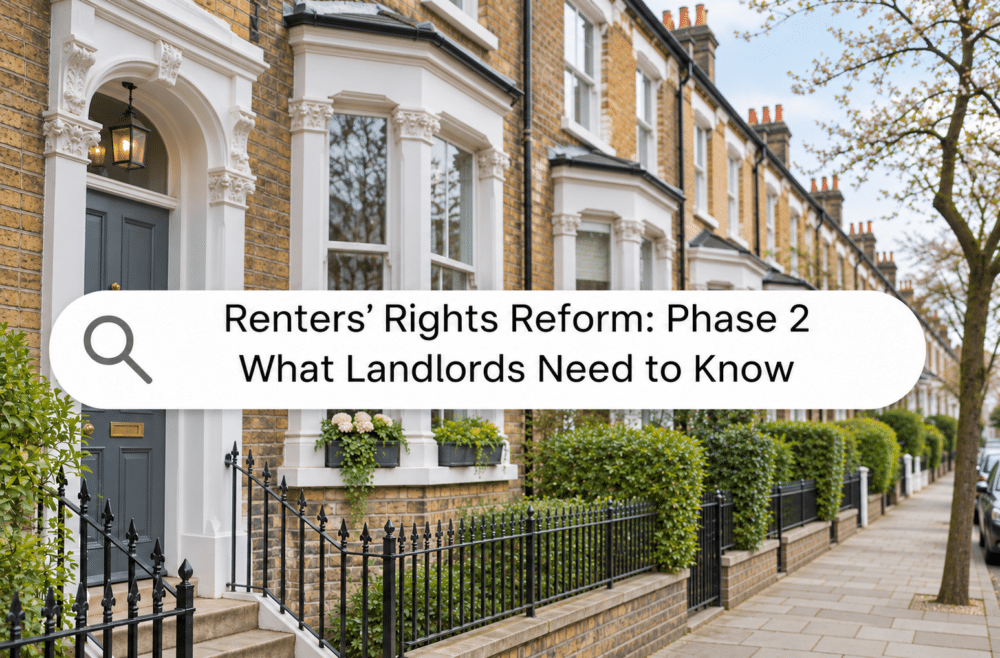
The next stage of the Renters’ Rights Act brings a new registration system for private landlords in England. For landlords in Bermondsey, Rotherhithe, Canada Water and the surrounding South East London neighbourhoods, now is a sensible time to organise property records and plan who will handle each part of registration.
The national rollout begins on 15 December 2026. London’s regional registration period runs from 15 July to 14 October 2027, with registration required before midnight on the final day. Landlords can register earlier, from the service’s December launch. Your property’s location determines its deadline, even if you live elsewhere.
This guide explains the landlord database, GOV.UK One Login and the practical preparation involved. Information is current as at 16 November 2026.
The Private Rented Sector Database will operate through the government’s Register your rental property service. Landlords of assured and regulated tenancies must register themselves and their eligible properties. Supported exempt accommodation is excluded. It is an England scheme, so landlords with homes elsewhere in the UK should check the rules applying there separately.
Registration will create a more consistent record of landlords and rented homes. The government describes it as a way to support compliance and help councils identify poor practice. A public interface is planned later; the initial registration rollout should not be confused with the launch of a fully public search service. The government overview of the registration service explains how the database will support compliance and what landlords should prepare.
The published registration timetable gives each region a three-month registration period. Landlords with properties in several regions should map each address against the relevant deadline. Propertymark’s overview of the rollout also explains that properties in different regions can be registered together from 15 December 2026.
| Property region | Regional window opens | Registration deadline |
|---|---|---|
| West Midlands | 15 December 2026 | 14 March 2027 |
| East of England | 15 January 2027 | 14 April 2027 |
| East Midlands | 15 February 2027 | 14 May 2027 |
| South East | 15 March 2027 | 14 June 2027 |
| Yorkshire and Humber | 15 April 2027 | 14 July 2027 |
| North West | 15 May 2027 | 14 August 2027 |
| North East | 15 June 2027 | 14 September 2027 |
| London | 15 July 2027 | 14 October 2027 |
| South West | 15 August 2027 | 14 November 2027 |
For example, living in London does not move a Birmingham rental property onto the London timetable. That home falls within the West Midlands window. The final regional deadline is 14 November 2027, so the programme continues beyond October.
GOV.UK One Login is the sign-in account used to access the online service. Setting up that account does not itself register you as a landlord or register a property. You still need to complete the separate service requirements.
If you already have One Login, check that you can access it and receive security codes. A Government Gateway account is a different sign-in system; do not assume that having an existing tax account means you already have One Login.
To prepare, choose an email address you control, create a secure password when prompted and arrange a way to receive security codes. Official guidance describes text messages and authenticator apps as sign-in options. Keep your personal sign-in credentials secure and use the service’s delegation process when involving an agent.
An important distinction is that the landlord guidance currently describes identity verification as optional. Landlords should therefore not be told that a mandatory passport check is a confirmed requirement for every registration. Follow the instructions presented by the official service when you register. A paper application route will also be available for those without digital access. You can check or manage your sign-in details through the GOV.UK One Login guidance.
Create a separate digital folder for each rental home. Make sure the address and ownership details match your records, and collect the current tenancy, rent, occupancy and licensing information alongside the relevant safety documents. Useful records include gas safety information where applicable, electrical inspection documentation and the EPC.
Check for missing pages, unreadable scans and certificates belonging to a previous address. A folder labelled with the property address and document dates will be easier to review than a collection of email attachments. Where information is held by your managing agent, agree which version will be used.
Joint landlords each need to register, with one registering the property and inviting the others. Companies and other organisational landlords have their own registration requirements. The official landlord guidance explains these arrangements, so establish the correct ownership structure before beginning. The full landlord registration guidance sets out the requirements for individual, joint and organisational landlords.
The landlord starts registration and remains responsible for completing it. Once a property registration number has been issued, they can invite their agent to provide certain information. Propertymark’s guidance on agents’ responsibilities explains that this support is not automatic: landlords and agents should agree what is covered and check their existing terms of business.
The government guidance for letting agents allows agents to supply tenancy details, licensing information and compliance certificates, and maintain these sections. Landlords must initiate registration and pay the fee. Required outstanding information must be supplied within 28 days; records also need updating within 28 days of changes. Missing information can leave a property registration inactive.
Agree the workflow before submitting anything: who starts the record, who uploads the documents, who checks completion and who records subsequent changes. Using an agent does not remove the need for your involvement, and registration support should be discussed as part of your agreed service.
Explore our landlord and property management services
The standard annual fee is £65 per property, with no VAT. Landlord registration itself and record updates are free. The first property establishes the shared annual renewal date for later properties.
First-year fees are adjusted during rollout, excluding days before 15 November 2027. The government calculates this by days rather than simple whole months. Its example of registration on 15 December 2026 gives an initial fee of £5.34, followed by renewal on 15 December 2027. Use the service calculation for your own dates.
The government’s guide sets out civil penalties of up to £7,000 for registration breaches, with serious or repeated breaches potentially attracting penalties up to £40,000 or prosecution. Failure to meet registration duties can also restrict possession orders, subject to specified antisocial behaviour exceptions. These are significant reasons to plan ahead rather than leave registration until the final day.
Read the government guide to the Renters’ Rights Act
The initial rollout covers let properties. Requirements to register vacant homes before marketing and display landlord and property numbers in adverts are planned for a later stage. The government says further guidance will precede those requirements. Landlords should avoid treating every future feature as a December 2026 obligation.
The new landlord ombudsman is a separate development. The government’s implementation roadmap places mandatory landlord sign-up in 2028, with advance notice to be given before membership becomes compulsory. Landlords should not treat 17 October 2027 as a universal ombudsman deadline. Awaab’s Law and the Decent Homes Standard for private renting also have separate implementation arrangements.
Start now by listing your properties, confirming their regions and checking who holds the tenancy and compliance records. Check access to One Login and speak to any joint landlords or company colleagues who will need to participate.
Agree registration responsibilities with your agent and organise the documents well ahead of London’s deadline. You can register from 15 December 2026 if you prefer to act early. Complete the process comfortably before midnight on 14 October 2027, then retain the registration references and diary the renewal. Build updates into your normal process whenever tenants, rents or certificates change.
For existing tenancies, the immediate task is to bring records together and register on time. When planning a future letting, check the latest guidance on vacant homes and advertising so the property’s next marketing campaign reflects the requirements then in force.
At Alex & Matteo, we can discuss your current letting arrangements and help you identify which records need attention before registration. Whether you manage your own property or use our management service, an early conversation will help establish the next steps for your home.
Find out more about our landlord services
Book a free valuation or consultation with Alex & Matteo